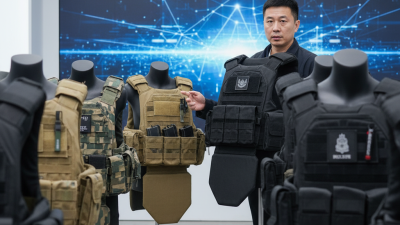
How to Choose Body Armour for Global Procurement in 2026?

Choosing Body Armour for global procurement in 2026 requires more than comparing prices, ratings, and delivery dates. Buyers must connect protection levels with real working conditions, user needs, and applicable national requirements. A vest designed for humid coastal storage may behave differently in a cold, dry warehouse. Weight also matters. A few extra kilograms can reduce mobility, comfort, and daily compliance.

Reliable procurement begins with evidence. Request independent test reports, material specifications, inspection records, and clear product traceability. Confirm whether testing reflects the intended configuration, including carriers, plates, closures, and accessories. Suppliers should explain manufacturing controls, expected service life, warranty terms, and replacement procedures. These details reveal more than polished brochures. They also support responsible purchasing decisions across borders.

Standards are not interchangeable. Verify local import rules, certification expectations, labeling duties, and end-user restrictions before signing a contract. A qualified compliance adviser or accredited laboratory can help identify gaps. Experience from previous deployments is valuable, but it should not replace current testing. Conditions change. So do supply chains.

Procurement teams should assess fit using realistic sizing trials, movement checks, and feedback from intended wearers. Document the results. A product that performs well in a laboratory may frustrate users during long shifts, vehicle travel, or outdoor work. Climate, maintenance access, training, and storage should shape the specification.

No checklist is perfect. A low bid can hide lifecycle costs, while a premium product may not suit every user. Good judgment comes from transparent evidence, careful questioning, and willingness to revise assumptions. This guide explores a practical, lawful framework for selecting dependable Body Armour in a complex global market.

How to Choose Body Armour for Global Procurement in 2026?

Defining Body Armour Requirements for Global Procurement in 2026

Defining body armour requirements should begin with the operational threat, not a catalogue photograph. The NIJ 0101.07 standard separates handgun and rifle protection into five performance levels: HG1, HG2, RF1, RF2, and RF3. This structure helps procurement teams match protection to documented risks. However, a higher rating can increase weight, heat, and fatigue. More protection is not automatically better.

SIPRI reported global military expenditure of 2.718 trillion US dollars in 2024, a 9.4% annual increase. This pressure may accelerate international purchasing, but rushed specifications create avoidable failures. Define the mission, ammunition threats, climate, wear duration, sizing range, and replacement cycle. Request independent laboratory evidence under NIJ 0101.07 or ISO 14876:2023. Check complete armour systems, not only the plate. Carriers, inserts, stitching, seals, and trauma performance matter. Field experience suggests that discomfort reduces consistent use. That detail is easy to underestimate.

Tips: Build a scored requirement matrix before requesting quotations. Include weight limits, temperature exposure, saltwater resistance, cleaning methods, and inspection intervals. Require batch traceability and test reports from accredited laboratories. Ask suppliers to explain limitations in plain language. Do not treat marketing claims as evidence. A pilot fitting with different body shapes is worthwhile. Procurement teams may still miss real-world movement demands. That is why user feedback should remain part of the specification.

Assessing Threat Levels, Protection Standards, and Intended Use

Global body armour procurement should begin with a documented threat assessment, not a preferred product list. Identify likely hazards, exposure duration, operating locations, and evacuation constraints. A security manager in a humid port may need different equipment from a driver in a cold inland city. Ask who will wear it, how often, and beneath which clothing. Fit is not cosmetic.

Protection claims require careful comparison. Check the exact test standard, protection level, test ammunition, backing material, and certification date. Standards such as NIJ 0101.06 or NIJ 0101.07 can support comparison, but certificates must match the supplied model and configuration. Some markets use different national standards, so independent laboratory evidence deserves attention. Do not treat a higher rating as automatically better. More protection can mean extra weight, heat, and slower movement. Test comfort properly. In field trials, measure performance after several hours, not during a five-minute fitting.

Intended use should shape every specification. A concealed vest for routine transport differs from overt equipment for checkpoint security or emergency response. Consider different body shapes, adjustable sizing, laundering, storage, replacement cycles, and user training. Inspect samples for stitching, panel labels, closures, and damage after repeated handling. Keep procurement records traceable. Include local import, workplace safety, and end-user requirements before purchase. I have seen teams overvalue laboratory figures and undervalue daily wearability. That mistake is easy to repeat.

How to Choose Body Armour for Global Procurement in 2026? — Assessing Threat Levels, Protection Standards, and Intended Use
Intended Use Typical Threat Profile Protection Configuration Relevant Standard or Test Framework What to Verify in Procurement Documents Mobility and Coverage Considerations Procurement Priority
Routine security, access control, and low-risk patrols Handgun ammunition, generally 9 mm or comparable pistol threats; risk assessment should identify local weapons and ammunition types. Concealable soft armour, normally worn under clothing. Select a front, back, and side-panel configuration appropriate to the required coverage. NIJ 0101.07 handgun categories HG1 or HG2, where applicable. Older NIJ 0101.06 labels may still appear in inventories, but the exact edition and certification status must be confirmed. Model-specific test report, threat rounds, conditioning procedures, backface deformation results, size range, and certificate validity. Do not treat a general “bulletproof” claim as a performance rating. Prioritise low weight, concealability, heat management, and compatibility with uniforms. More coverage generally increases weight and thermal burden. Concealment, comfort, certified handgun protection, service life, and wearer acceptance.
Armed patrols and general law-enforcement response Handgun threats plus selected rifle threats, depending on the operational area and intelligence assessment. Soft armour combined with removable hard rifle plates in a carrier. Front and back plates may be supplemented by side plates. NIJ 0101.07 handgun and rifle categories; rifle categories include RF1, RF2, and RF3. The specific test ammunition must match the procurement threat assessment. Confirm whether protection applies to the complete system or only to the plate. Check plate size, curvature, strike-face orientation, multi-hit performance, edge limits, and tested carrier configuration. Use scalable plate carriers where missions vary. Side, shoulder, throat, and groin coverage should be selected only when the additional weight is operationally justified. Threat-to-weight ratio, modularity, multi-hit performance, logistics, and compatibility with communications and load-bearing equipment.
Military or high-risk rifle operations Rifle projectiles, including intermediate and full-power rifle ammunition; armour-piercing risk must be assessed separately from standard ball ammunition. Hard ceramic-composite, polyethylene, or metallic plates, normally used with a carrier and optional side protection. Material selection affects weight, durability, and handling requirements. NIJ 0101.07 RF categories, including RF3 for armour-piercing rifle threats where the tested threat is relevant. NATO STANAG 2920 V50 testing may also be specified for fragmentation, but V50 is not automatically equivalent to an NIJ ballistic rating. Exact projectile type, velocity, impact angle, shot spacing, number of impacts, conditioning, plate dimensions, and acceptance criteria. Require independent laboratory evidence for the delivered configuration. Higher protection levels can materially reduce endurance and agility. Evaluate plate cut, thickness, edge coverage, body-size range, and compatibility with vehicles and harnesses. Verified rifle-threat performance, durability, weight, environmental resistance, repairability, and supply continuity.
Vehicle crews and checkpoint personnel Mixed handgun, rifle, and fragmentation threats with elevated exposure around vehicle openings and confined spaces. Scalable torso armour with rifle plates; optional side, groin, shoulder, and neck modules. Vehicle-specific shields or blankets should be treated as separate protective products. NIJ 0101.07 for ballistic plates and soft armour; STANAG 2920 or another specified fragmentation method for fragment protection. Use a documented test method rather than comparing nominal ratings alone. Assess protection at plate edges and gaps, seated posture, harness interference, egress, storage temperature, vibration, moisture, and repeated handling. Prioritise seated mobility, rapid exit, low snag risk, and compatibility with restraints, radios, and vehicle interiors. Operational integration, edge and gap management, environmental durability, and emergency egress.
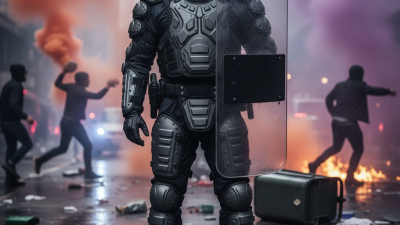
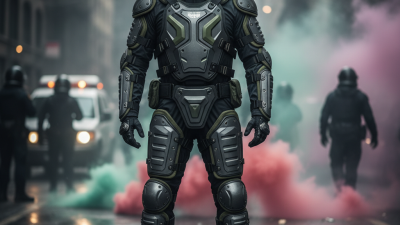
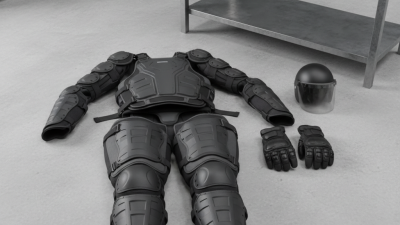
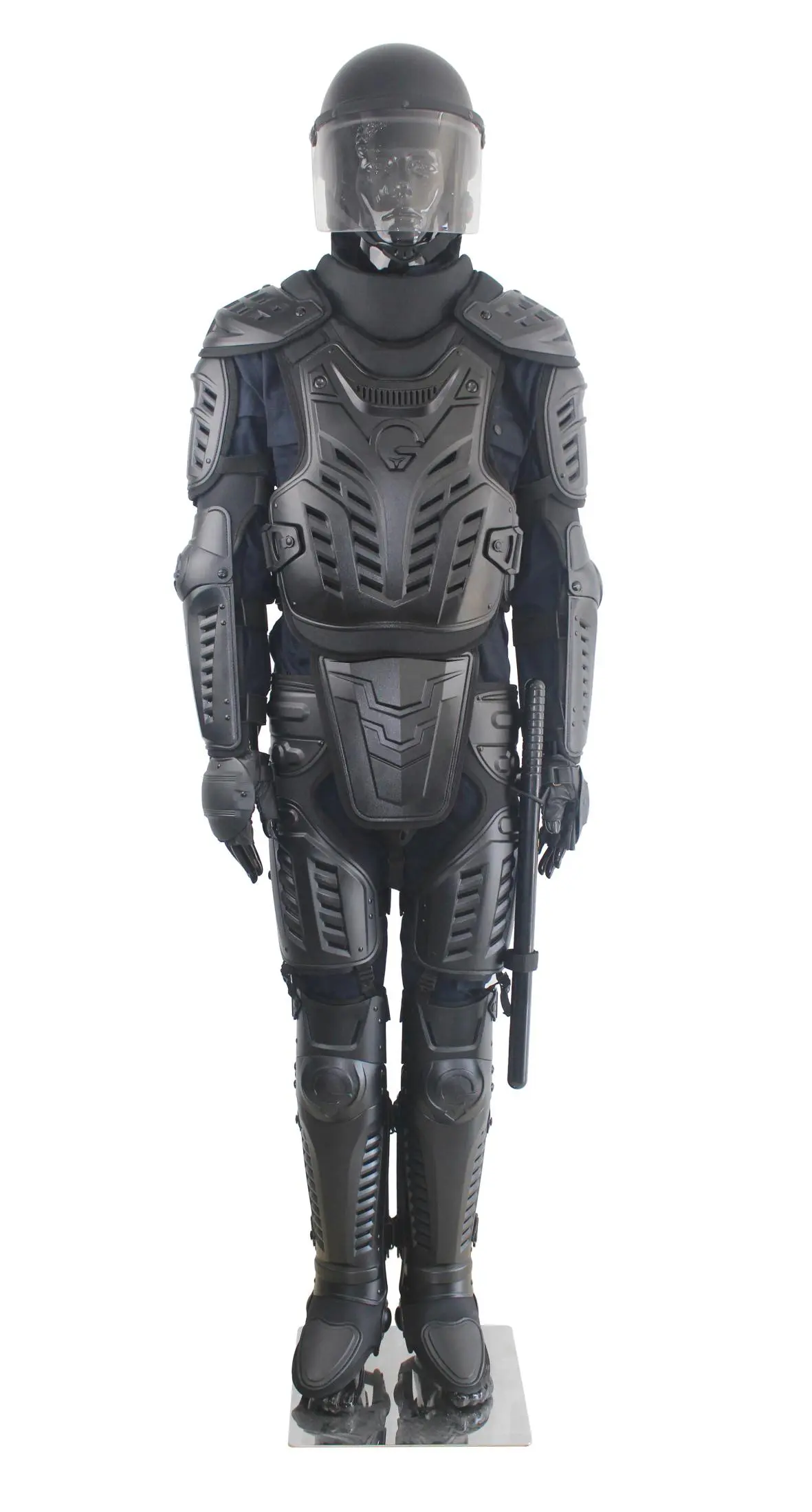
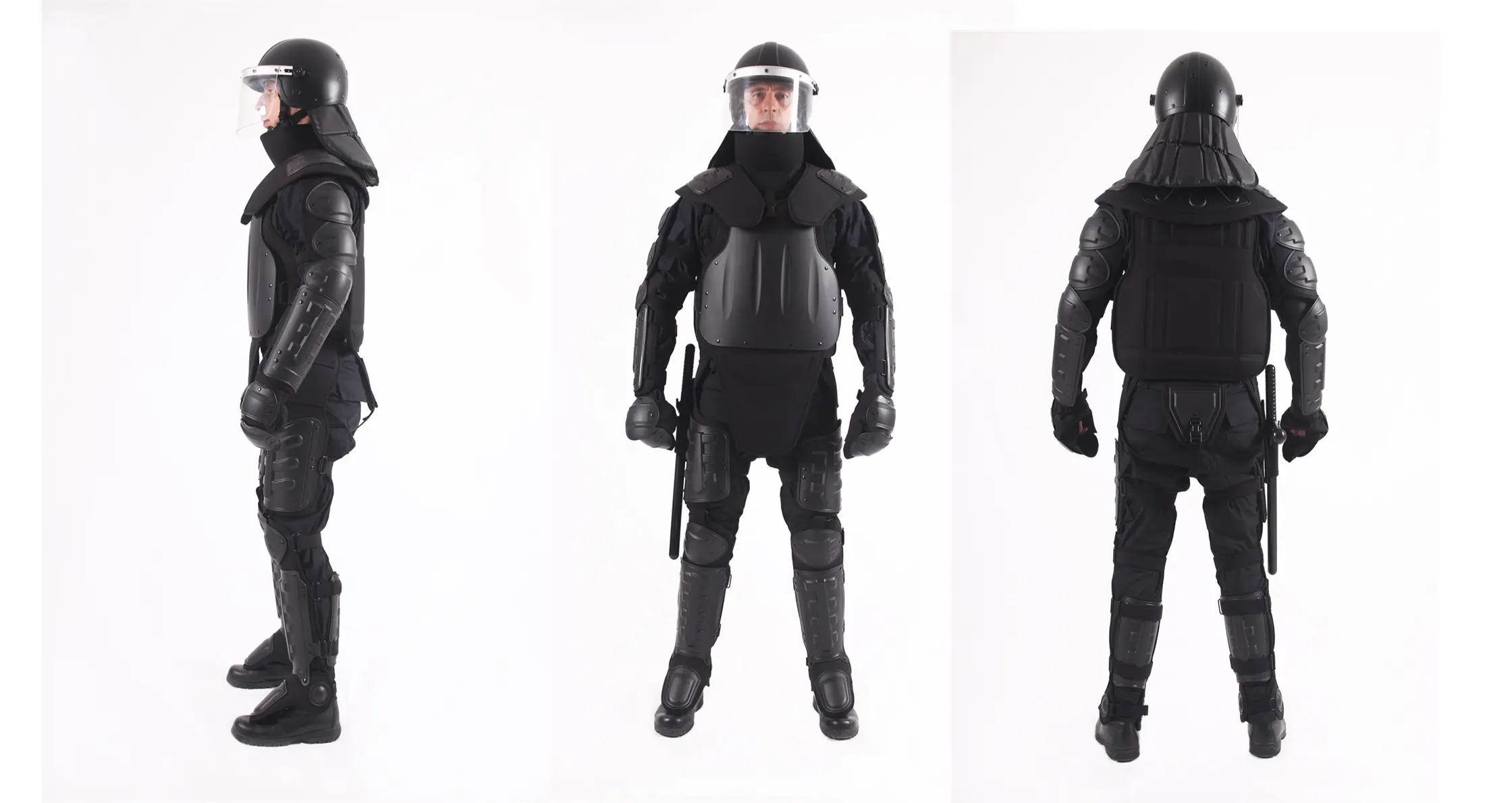
Riot control and public-order operations Blunt impact, thrown objects, limited fragmentation, and possible edged-weapon threats; firearm protection may be a separate requirement. Impact-resistant helmet, face shield, torso and limb protection, with optional stab-resistant panels. Ballistic plates are not a substitute for impact or riot-specific protection. Relevant regional public-order and impact standards; use NIJ 0115.00 or an equivalent specified stab-resistance method only when stab protection is required. Ballistic and impact tests must be evaluated separately. Verify impact energy, test locations, visor optical quality, flame and heat behaviour, attachment strength, cleaning instructions, and field-of-view requirements. Coverage and articulation are important, but excessive bulk can impair formation movement, communication, and weapon handling. Impact coverage, visibility, ventilation, articulation, cleaning, and compatibility with crowd-control equipment.
Correctional facilities and custodial transport Edged weapons, improvised stabbing instruments, blunt-force attacks, and potentially handgun threats. Stab-resistant or dual-purpose armour selected according to the actual threat; ballistic capability should be added only where firearms are credible. NIJ 0115.00 provides a recognized stab-resistance framework with threat levels and test conditions. Ballistic claims should be supported by a separate ballistic standard such as NIJ 0101.07. Confirm blade and spike threat types, energy level, test location, penetration limit, conditioning, seam performance, and whether the garment remains protective after laundering or decontamination. Prioritise concealment, flexibility, heat control, laundering procedures, and resistance to unauthorized removal or tampering. Correct weapon-threat match, seam protection, maintainability, concealment, and wearer comfort.
Humanitarian, diplomatic, and overseas field operations Threats vary by country and mission, including handgun fire, rifle fire, fragmentation, and explosive hazards. Modular system combining soft armour, hard plates, helmet, eye protection, and mission-specific accessories. Separate vehicle or blast protection may be required. Use a recognized ballistic standard accepted by the contracting authority, such as NIJ 0101.07, together with a separately defined fragmentation or blast test method where required. Require country-of-use legal review, export and import documentation, climate conditioning, warranty terms, replacement plan, serial-number traceability, and local service capability. Consider extreme heat, humidity, dust, altitude, long-duration wear, air transport, and compatibility with medical and communications equipment. Adaptability, climate durability, documentation, training, replacement logistics, and regulatory compliance.
Procurement reserve and multi-mission inventory Uncertain or changing threats across multiple users and locations. Layered inventory: concealable soft armour, scalable carriers, rifle plates in several sizes, helmets, and separately managed stab or fragmentation items. Maintain separate records for each protection claim and test standard. Do not combine NIJ ballistic, stab, impact, and fragmentation ratings into one unqualified protection label. Use a configuration-control list covering manufacturer model identifier, lot, size, material, manufacture date, test report, storage conditions, inspection criteria, and replacement date. Standardise interfaces where possible, while preserving size and fit options. Conduct wearer trials before large-volume purchase. Interoperability, traceability, lifecycle cost, replenishment lead time, and training simplicity.
Important procurement note: Protection ratings are not universally interchangeable. A compliant result applies to the tested armour design, ammunition, test method, conditioning, impact locations, and configuration. Before award, obtain current independent test evidence, verify the applicable national regulations, conduct fit and mobility trials, and define inspection, storage, warranty, and replacement requirements.

Comparing Armour Types, Materials, Fit, and Performance

Global body armour procurement in 2026 requires more than comparing catalogue prices. Armour type, material, fit, and measured performance must work together.

Soft armour suits lower-weight needs and supports extended wear.

Hard plates provide higher protection but add bulk and fatigue. Hybrid systems can balance both. Aramid fibres may offer flexibility, while ceramic or polyethylene plates reduce weight in different ways. No option is perfect. Each material has trade-offs involving heat, impact resistance, storage, and service life.

Fit directly affects protection.

Measure the user, not an assumed size chart. The vest should cover vital areas without restricting breathing or shoulder movement. Check seated and walking positions. A poor fit can create gaps during ordinary movement. Small details matter, such as adjustable shoulders, stable closures, and space for clothing layers. Testing should include certified laboratory reports, environmental conditioning, and clear performance ratings. A product that passes one test may still perform differently after heat, moisture, or rough transport.

Procurement teams should verify manufacturing controls, batch traceability, inspection records, and replacement procedures.

Ask how performance claims are independently verified. Confirm compliance with destination-country requirements before placing an order. Delivery consistency also matters, especially when several sizes are needed. A spreadsheet can look complete and still hide weak evidence. Field feedback should influence later purchases, even when it challenges the original specification. Expect some revisions.

Reviewing Suppliers, Compliance Documents, Pricing, and Lead Times

How to Choose Body Armour for Global Procurement in 2026?

Selecting body armour for international procurement requires more than comparing product photos. I recommend reviewing supplier experience, manufacturing capacity, and quality controls before requesting final quotations. Ask for factory records, production photographs, customer references, and batch inspection procedures. A capable supplier should explain material selection clearly. They should also identify limitations, not promise perfect protection.

Compliance documents need careful checking. Request current test reports, declarations of conformity, material specifications, and traceability records. Confirm the testing laboratory’s accreditation and the report’s exact product configuration. A report for one model may not cover another size or design. Check country-specific import rules, labeling requirements, and safety standards with qualified local advisors. Documents can expire. That assumption can fail.

Pricing should include samples, testing, packaging, inspection, transport, insurance, duties, and currency changes. The lowest quotation may hide shorter testing, weaker packaging, or unclear warranty terms. Compare equal specifications in a detailed cost sheet. Lead times also need evidence. Request a schedule covering material purchasing, production, testing, inspection, and shipment. Add practical buffer time for customs delays and rejected samples. In my experience, suppliers often quote ideal schedules. Real production is less tidy. A written recovery plan helps when materials arrive late or a batch needs rework. Payment milestones should match verified progress, with records retained for every shipment.

Managing International Logistics, Quality Control, and Lifecycle Support

How to Choose Body Armour for Global Procurement in 2026?

International procurement involves more than selecting a protection rating. Confirm the intended user, operating environment, and local authorization requirements before requesting quotations. Ask suppliers for current test reports, material specifications, traceability records, and maintenance guidance. Independent laboratory evidence matters more than polished sales language. It reduces uncertainty.

Logistics can quietly damage quality. Specify moisture-resistant packaging, shock protection, and storage limits for every shipment. At receiving, inspect seals, labels, stitching, fasteners, and deformation. Photograph each carton before opening. Record lot numbers and production dates in a central database. For ocean freight, monitor humidity indicators and avoid prolonged exposure to heat. Customs documents must match the physical shipment exactly. Small discrepancies can delay an entire project.

Tips: Build a sample approval process before volume purchasing. Test fit across different body types, not only on mannequins. Keep spare covers, approved replacement parts, and inspection tools available. Schedule periodic checks after deployment. Retirement dates should be visible and practical.

Quality control is never perfect. A checklist may miss damage hidden beneath packaging. Human review still matters. Procurement teams should compare incoming samples with the approved reference unit, then document every deviation. Lifecycle support also needs clear response times, training materials, and secure repair procedures. Reassess the plan after the first shipment. Real conditions often expose assumptions that looked reasonable on paper.

How to Choose Body Armour for Global Procurement in 2026?

Recommended evaluation weights for managing international logistics, quality control, and lifecycle support.

This transparent 100-point procurement framework prioritizes verified ballistic performance and documented quality control, while giving substantial weight to export logistics, delivery reliability, traceability, warranty coverage, and long-term replacement support. Buyers should adapt the weights to mission risk, destination regulations, climate, and contract requirements.